Monday, November 18, 2013

CHIA: TINY SEED, BIG BENEFITS


What is chia?
The seeds come from Salvia Hispanica plant, which is native to southern Mexico and Guatemala although they are cultivated in many other places now especially in Australia, which is probably the worlds largest producer. The seeds can be black, brown or white and the nutritional value is more or less the same, although the darker seeds have a slightly higher concentration of antioxidants.

Chia seeds are often compared to flax seeds because they have similar nutritional profiles. But the main difference is that chia seeds don't need to be ground the way flax seeds do. Chia also has a longer shelf life and does not go rancid like flax does.

Nutrition facts and benefits

Essential minerals for your bones and teeth

A serving of chia seeds - that's around 15g or a level tablespoon - has 18% of the recommended daily intake for calcium, which puts your well on your way to maintaining bone and oral health, and preventing osteoporosis. Chia seeds give you 27% of your daily value for phosphorus, a mineral that also helps you maintain healthy bones and teeth. Phosphorus is also used by the body to synthesize protein for cell and tissue growth and repair.
Manganese isn't a well-known nutrient, but it's important for our health: it's good for your bones and helps your body use other essential nutrients like biotin and thiamin. One serving of chia seeds, or 28 grams, has 30% of your recommended intake of this mineral.

More anti-oxidants than in blueberries
The antioxidant content (which includes quercetin, caffeic acid and chloregenic acid) in chia seeds has an impressively high ranking on the ORAC scale (oxygen radical absorbance capacity) at over 10,000 per 100g (blueberries have 9,000).

Complete protein
Chia seeds are a complete protein as they have all the essential amino acids and so are useful for vegetarians and vegans. Moreover, chia seeds don't have any cholesterol. One 28-gram serving of these super seeds has 4.4 grams of protein, nearly 10% of the daily value.

Rich in fibre, chia is a natural aid in controlling DIABETES
Chia seeds have a very good amount of fibre: just a 28-gram or one-ounce serving of chia has 11 grams of dietary fibre — about a third of the recommended daily intake for adults.
But here's where it gets really cool. If you soak chia seeds in water for about 30 minutes, you will get a glass of almost solid gelatin. Science believes this is the result of the soluble fiber in the chia. These fibers, known as mucilages, may also form this gel-like texture in the stomach when you eat chia, creating a barrier between carbohydrates and the digestive enzymes that break them down, slowing the conversion of carbohydrates to sugar... so they can be a natural aid in controlling diabetes!

 Chia seeds are the "perfect food" for WEIGHT LOSS
And chia can help you get skinny. Because they can help prevent the absorption of some of the food you eat (along with the calories), chia can be a great asset to any diet plan. And with their high fiber content and nutritional density, chia helps dieters feel fuller faster and remain sated for longer periods of time. Tryptophan, an amino acid found in turkey, is also found in chia seeds. Tryptophan helps regulate appetite, sleep and improve mood.

Chia seeds: great enhancer in hydrating our bodies, a valuable tool for athletes
It gets better. Chia seeds are considered to be hydrophilic, meaning they can absorb large amounts of water quickly. They can hold 10 times their weight in water, making them a great enhancer in hydrating our bodies, a valuable tool for athletes or anyone looking to improve their day to day performance and endurance.

Rich in Omega-3, chia lowers risk of heart disease
But it's the fat content of chia that seems to be a focal point for its supporters. Eaten raw, chia seeds contain a rich concentration of essential fatty acids, with 30% of their fat coming from omega-3 and 10% from omega-6, considered the perfect balance for healthy human tissue.
According to the Cleveland Clinic, chia seeds have been shown to improve blood pressure in diabetics, and may also increase healthy cholesterol while lowering total, LDL, and triglyceride cholesterol.

How to use chia seeds
With no cholesterol, simple sugar or gluten, high in the most prized nutrients we need, easy to digest and needing no grinding, chia seeds could well be nature's perfect food. At 137 calories an ounce, they just may be one of the healthiest things around...
You can simply sprinkle them on various dishes, like salads and whole grains; you can soak and sprout them to create smoothies or morning porridges, like oatmeal; you can add them to baked goods like breads, muffins and biscuits. Small, like poppy seeds, chia are mildly nutty, but without a strong flavor, so they can be used in a variety of ways without altering the flavor of a dish.
Here are two easy to make recipes...


Roasted chia cauliflower

Prep Time: 10 minutes - Cook time: 30 minutes
Yield: 4 servings
Ingredients
  • 1 tbsp. olive oil
  • a pinch of red pepper flakes
  • 1 tbsp. chia seeds
  • 1 head cauliflower, broken into florets
  • salt + pepper, to taste
Directions
  1. Preheat oven to 400ºF.
  2. Heat olive oil and pepper flakes in a small saucepan over medium heat for about 3 minutes to infuse the flavor of the pepper into the oil. Set aside.
  3. Line a rimmed baking sheet with foil. Transfer cauliflower to the baking sheet and drizzle with infused olive oil. Toss with tongs to coat. Sprinkle chia seeds over the cauliflower and add salt and pepper to taste.
  4. Bake cauliflower for 20-30 minutes, or until softened and just beginning to brown.

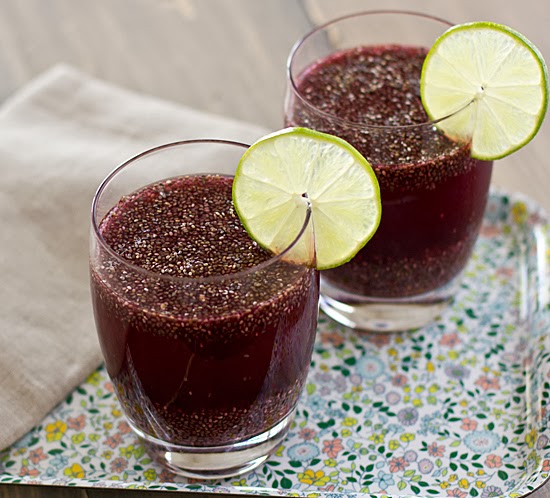
Pomegranate lime chia fresca

Prep Time: 15 minutes - Yield: 1
Ingredients
  • 3 tbsp. chia seeds
  • 1/2 c. water
  • 3/4 c. pomegranate juice
  • 1 tbsp. fresh lime juice
Directions
  1. Place chia seeds in a glass. Pour water, pomegranate juice, and lime juice over seeds. Let sit for 15 minutes. Whisk to break up any clumps of seeds and serve.


Sources: http://healthyeating.sfgate.com/, http://www.huffingtonpost.ca/, http://www.huffingtonpost.com/, http://ohmyveggies.com/recipe-roasted-chia-cauliflower/, http://ohmyveggies.com/how-to-make-your-own-chia-drink-pomegranate-lime-chia-fresca-recipe/

Friday, November 15, 2013

DIET SODA DOESN'T HELP WEIGHT LOSS AND CAN BE HARMFUL FOR HEALTH


Diet beverages and other non-caloric, artificially sweetened foods and drinks may not be the healthy choice to manage weight that they appear, according to a Purdue University expert's review of recent scientific studies. "Public health officials are rightfully concerned about the consequences of consuming sugar-sweetened beverages, such as soft drinks, but these warnings may need to be expanded to advocate limiting the intake of all sweeteners, including no-calorie sweeteners and so-called diet soft drinks," said Susan E. Swithers, a professor of psychological sciences and a behavioral neuroscientist. "Although it seems like common sense that diet sodas would not be problematic, that doesn't appear to be the case.
Findings from a variety of studies show that routine consumption of diet sodas, even one per day, can be connected to higher likelihood of heart disease, stroke, diabetes, metabolic syndrome and high blood pressure, in addition to contributing to weight gain."

Diet soda and obesity
Artificial sweeteners used in these drinks are meant to give you the taste without the calories but a major review of scientific studies suggests they may instead interfere with the body's normal energy regulation. In a paper published in Trends in Endocrinology and Metabolism Susan Swithers says sweet tastes normally trigger a psychological response that signals the arrival of nutrients in the stomach. However, research shows when artificial sweeteners are consumed no such energy burst follows the taste and over time this appears to weaken the body's natural response to a sweetness.
In a previous study, Swithers showed that when we substitute artificial sweetener for real sugar, the body learns it can no longer use its sense of taste to gauge calories. So, the body may be fooled into thinking a product sweetened with sugar has no calories and, therefore, people overeat. "Historically, we knew that our body learns that if the food is thick, such as whole milk, it tends to have more calories than compared to a thinner liquid such as skim milk," Swithers said. "Now, our research reinforces this and takes it one step further, showing that our bodies translate this information about perceived calories into a gauge to tell us when to stop eating." As a result, the body's natural ability to regulate food intake and body weight may be weakened when this natural relationship is impaired by artificial sweeteners.
 A study presented at a meeting of the American Diabetes Association in 2011 showed that drinking diet soda is associated with a wider waist in humans. In the study, researchers collected height, weight, waist circumference and diet soda intake data from 474 elderly people who participated in the San Antonio Longitudinal Study of Aging. They were followed up an average of 9.5 years later, according to the research. Researchers found that the diet soda drinkers had waist circumference increases of 70 % greater than those who non-diet soda drinkers. And people who drank diet soda the most frequently -- at least two diet sodas a day -- had waist circumference increases that were 500 % greater than people who didn't drink any diet soda, the study said.

Diet soda and diabetes
The American Diabetes Association found that people who drank diet soda are at increased risk of diabetes by 67%
Artificial sugar didn't produce any better results in a test on mice. Researchers for this test found that diabetes-prone mice that were fed a diet that included aspartame for three months, had higher blood glucose levels than mice not given aspartame.
And in a study published earlier this year in the American Journal of Clinical Nutrition, French researchers found an association between Type 2 diabetes and self-reported diet soda consumption. Plus, when comparing the diabetes risk of drinkers of diet with drinkers of regular sodas, researchers found that diet drinkers had the higher diabetes risk.

Diet soda and heart disease
Researchers from the University of Miami and Columbia University found that people who drink diet soda every day have a 43% higher risk of experiencing a vascular event over a 10-year period, compared with people who didn't drink soda. Plus, this association held true even after taking into account known stroke and heart risk factors like diabetes and high blood pressure.

These studies are observational. It's unknown if the diet soda is actually causing these conditions, or if people who are already at high risk for a heart attack, stroke and Type 2 diabetes tend to drink diet soda in an effort to lead a healthier lifestyle.
If diet soda really was causing heart attacks and strokes, there would have been spikes in these conditions in recent years. Rather, it's more likely a result of the fact that people who eat a lot of artificial sweeteners may not have the healthiest diet. "At that point, the less healthier the diet, the more prone you are to cardiovascular disease," says Dr. David Katz, the founding director of Yale University's Prevention Research Center. "It's a sign that there's something wrong with the dietary pattern overall."

Diet soda and kidney problems
A study published in Harvard Medical School’s Clinical Journal of the American Society of Nephrology found that women who drank 2 or more cans of diet soda per day were more likely to suffer decline in kidney function.

Diet soda and depression
A recent study has linked soft drinks to depression – with diet versions particularly problematic.
The finding comes from US researchers who studied the drink consumption of 265,000 men and women aged 50 to 71. Ten years into the study, the volunteers were asked if they had been diagnosed with depression in the previous five years. Those who drank more than four cans of soft drinks a day were 30% more likely to have had depression than those who drank none, the American Academy of Neurology conference heard. The risk seemed greater among those who preferred diet drinks. The researchers said this may be due to the presence of the artificial sweetener aspartame. Making the link does not prove soft drinks cause depression. But researcher Honglei Chen said: "While our findings are preliminary and the underlying biological mechanisms are not known, they are consistent with a small but growing body of evidence suggesting that artificially sweetened beverages may be associated with poor health."

 
Diet soda and teeth damage
Although regular soda may be worse for your teeth, diet soda can still do damage. The high acidity of diet sodas causes erosion, resulting in weak, ugly and unhealthy teeth.


Tips to stop drinking diet soda
Breaking any habit or stopping any unhealthy behavior requires willpower, confidence, and most important, a good plan.

Start getting rid of any diet soda in your home, workplace, car, ...
Then switch to healthy alternatives:
  • Infused water. Commercial brands deliver a calorie-free water with a hint of anything from cucumber to lemon to blueberry -- but these sips are just as easy (and less expensive) to make at home. Simply cut up your favorite fruit or vegetable and leave in a pitcher of water for at least three hours, according to Martha Stewart's recipe. You can also add herbs like mint or rosemary for an extra flavor punch.
  • Flavored Seltzer. Flavored seltzer can stave off cravings for the sweeter stuff. Although they are low-calorie and caffeine-free, they are full of flavors like raspberry, lemon-lime or black cherry and are just as refreshing. 
  • Iced Tea. This iced treat is an easy way to control the terms of your tea: caffeinated varieties like black, green and white tea make nice, strong iced teas -- but herbal options also abound for those of you who care to stay caffeine-free. Simply brew a strong tea -- if you like your drinks sweet, add a hint of honey. Leave in the refrigerator until cool and then pour over ice. The tea also delivers a burst of polyphenols -- an antioxidant found in tea tannins -- that can help stave off some cancers and regulate cholesterol.
    • Iced Coffee. For those who get a kick from caffeine, flavored water just can't beat a Diet Coke. That's where iced coffee comes in: highly adaptable (add or skip the sugar! use dairy milk or a substitute like almond!), relatively inexpensive and with a strong, almost caramel-like flavor, a cold, eye-popping coffee can serve as a lower sugar alternative to your favorite soda. And research shows that coffee may have health benefits that extend well beyond weight management: helping to protect against several types of cancer, Type 2 diabetes and more.
    • Fresh Juice. Unlike bottled varieties, freshly juiced fruits and vegetables have no added sugar. By selecting the ingredients, you can also control sugar portions by tempering sweet fruits like mangoes, grapes and melons with low-sugar, high-fiber fare such as kale, celery and lettuce. 

    Sources: http://www.huffingtonpost.com/2013/07/11/, http://www.huffingtonpost.com/

    Thursday, November 14, 2013

    Popcorn as healthy as veggies? How you pop it makes the difference


    Nothing goes better with a TV show or a movie than freshly popped popcorn.
    But, popcorn can become a nutritional nightmare once it is drenched in butter and salt. Now, chemist Joe Vinson and his team at the University of Scranton in Pennsylvania are looking at the unsung health benefits of plain, unadorned popcorn.

    Microwave popcorn is healthier than other snacks. It has more fiber, more polyphenols, and less calories, less fat,” said Vinson.
    According to Vinson's research, one serving of popcorn contains high levels of healthy antioxidants called polyphenols.
    The study found that there were 300 mg of polyphenols in a serving of popcorn, compared to 160 mg in a serving of fruit. This is due to the fact that fruit and vegetables have high water content and the healthy antioxidants are diluted. Popcorn is only 4 percent water – compared to the 90 percent water that makes up many fruits and vegetables – so the concentration of polyphenols is much higher in the snack food because it is not as diluted.
    Polyphenols may combat deadly diseases like cancer and heart disease, but none of popcorn’s great health benefits are found in the white fluffy part of the food: “If you want the maximum benefit to your health – the fiber and the antioxidants – then you need to eat that little kernel, despite the fact that it sticks between your teeth,” Vinson said.
    Researchers also said that microwaving, or air-popping, popcorn does not affect its antioxidant levels

    Vinson called popcorn the perfect snack food: “It's the only snack that is 100 percent unprocessed whole grain,” he said. “All other grains are processed and diluted with other ingredients...One serving of popcorn will provide more than 70 percent of the daily intake of whole grain. The average person only gets about half a serving of whole grains a day, and popcorn could fill that gap in a very pleasant way."
    Popcorn contains three times more fibre by weight than sunflower seeds, keeping you feeling fuller for longer, as well as balancing your blood sugar levels (so no mood swings or cravings for sweet snacks) and helping to lower 'bad' LDL cholesterol. 

    But the good news is not over. Popcorn also contains a number of vitamins:  folate, niacin, riboflavin, thiamin, pantothenic acid, and vitamins B6, A, E and K.  A serving of popcorn contains about 8 percent of the daily value of iron, with lesser amounts of calcium, copper, magnesium, manganese, phosphorus, potassium and zinc.  The popcorn hull is the source of much of the food's nutritional value.  Hulls contain beta-carotene, lutein and zeaxanthin that are important in maintaining eye health.

    However, Vinson warned that it is very easy to turn this healthy snack into an unhealthy one. Air-popped popcorn is much lower than calories than microwave popcorn – although slathering on butter, oil and other ingredients can cause the calorie and fat content to rise exponentially.
    Also, Vinson added that popcorn cannot replace fruits and vegetables in a healthy diet because fruits and vegetables contain essential vitamins and other nutrients that popcorn lacks.

    But if you’re craving a crunchy, healthy snack, look no further than a bag of microwavable popcorn.


    Here is an idea for a healthy snack

    Dilly lemon munch - Yield: 2 quarts

    Ingredients
    • 2 quarts popcorn popped 
    • 2 tablespoons shredded lemon peel
    • 1 teaspoon dill weed
    • Optional: 1/2 teaspoon low-sodium salt

    Directions

    1. Toss popcorn with lemon peel and dill weed.
    2. Flavor enhances as popcorn stands.

    Sources: http://www.scranton.edu/ , http://www.acs.org/, http://www.ars.usda.gov/, http://resources.popcorn.org/nutrition/

    Wednesday, November 13, 2013

    COMPARING CALORIES TO MILES CURBS CALORIE INTAKE


    Nutrition labeling has been required on packaged food since 1990, and the new federal food safety law will require calorie counts to be posted for restaurant food — all in an effort to get the American public to eat healthier.
    But most studies on calorie count labels show they don't do much to nudge people toward better food choices. If I want that oh-so-delicious Chunky Monkey ice cream, knowing that a half-cup serving 300 calories and 18 grams of fat isn't going to stop me. But what if I knew that it would take me an hour and 20 minutes of brisk walking to burn off those Chunky Monkey calories? Would I think twice?
    Probably, says Ashlei James, a graduate student at Texas Christian University. Researchers found out that subjects who were offered a menu that showed the number of minutes of brisk walking it would take to burn off the calories consumed from the food were more likely to choose healthier options than those who were given menus with or without calorie counts.
    "Brisk walking is something nearly everyone can relate to, which is why we displayed on the menu the minutes of brisk walking needed to burn food calories," said Ashlei James in a press release.

    The researchers asked 300 men and women between the ages of 18 to 30 to look at a menu with either calorie labels, a menu without calorie labels or a menu that listed the amount of minutes of brisk walking it would take to negate the calories consumed if a person ate that option. For example, a woman would have to walk for two hours to get rid of the calories in a quarter-pound double cheeseburger. All the menus had the same food options, which included burgers, chicken sandwiches or tenders, salad, fries, desserts, soda and water. There was no difference observed in ordering choices between the group that had menus with calorie labels and those that saw a menu without them. However, the exercise menu group ordered foods that contained 100 fewer calories on average.
    Dr Meena Shah, who led the study, said the study showed a need for a more effective strategy to encourage people to order and consume fewer calories from restaurant menus.
    She added: "This study suggests there are benefits to displaying exercise minutes to a group of young men and women".

    Another study published in the journal Appetite (http://www.sciencedirect.com/science/article), pointed to similar findings.
    Anthony Viera and his colleagues of the University of North Carolina at Chapel Hill School of Medicine conducted an online survey of 802 individuals randomly presented with one of four hypothetical menus. One of the menus provided only calorie counts, another supplemented this with information about the number of minutes one would need to walk to burn those calories whereas the third menu showed calorie numbers plus the distance necessary to walk them off. The fourth menu had no nutritional data whatsoever. All of the physical activity labeling for walking was based on the energy expenditure of a 160-pound adult walking at a rate of 30 minutes per mile, so aregular burger was, for example, listed as containing 250 calories, the equivalent amount burned in 2.6 miles, or 78 minutes of walking.
    People who viewed the menu without nutritional information ordered a meal totaling 1,020 calories, on average, significantly more than the average 826 calories ordered by those who viewed menus that included information about walking-distance. Study participants ordered meals adding up to averages of 927 calories and 916 calories from menus with only calorie information or calorie information plus minutes walking, respectively, although the differences between these two totals were not statistically significant.A difference of 200 or even 100 calories might not seem large but a 2011 study from researchers that included scientists at the National Institutes of Health calculated that eating just 10 fewer calories a day would make a person shed a pound of weight over three years.


    The test menu shows calorie information next to food items
    and the number of miles or minutes a 160-pound person
    would have to walk to use up the calories.
    According to the USDA’s 2010 dietary guidelines, the average adult male who is moderately active should consume 2200-2800 calories each day, depending on age. The average adult female who is moderately active should consume 1800-2000 calories each day, depending on age. Most Americans consume far more calories than the recommended amount.
    So, how many calories do you burn with brisk walking? According to the Mayo Clinic, a 160-pound person who walks 3.5 miles in an hour will burn about 314 calories. Below a table by healthgram shows how long that person would have to exercise to burn the calories in the following popular restaurant foods.


    In the meantime those curious about physical activity equivalents of the food they eat can chew on this: the recent publication Convert Anything to Calories reportedly states that you can burn off the calories in one Big Mac with 350,000 clicks of a computer mouse.


    Food
    Calories
    Minutes of Brisk Walking to Burn Calories
    Applebee's Sizzling Skillet Fajitas - Chicken
    1290
    246.5
    Arby's French Dip & Swiss Sandwich
    810
    154.8
    Ben & Jerry's Vanilla Ice Cream (1/2 cup)
    230
    43.9
    Brixx Wood Fired Pizza Buffalo Chicken Pizza
    1096
    209.4
    Burger King Chicken BLT Garden Fresh Salad
    550
    105.1
    Cheesecake Factory Original Cheesecake
    710
    135.7
    Chick-fil-A Chicken Sandwich
    440
    84.1
    Hooters Chicken Wings (5 piece)
    866
    165.5
    International House of Pancakes Country Omelet
    1220
    233.1
    McAlister's Chicken Tortilla Soup (in bread bowl)
    650
    124.2
    McDonald's Cheeseburger
    300
    57.3
    Morton's Steakhouse Chicago Style Bone-In Ribeye Steak
    1360
    259.9
    Olive Garden Fettuccine Alfredo (dinner portion)
    1220
    233.1
    P.F. Chang's Chicken Lettuce Wraps (1/4 order)
    160
    30.6
    Starbucks Mocha Frappuccino (grande)
    270
    51.6
    Subway Meatball Marinara Sub (6 inch)
    480
    91.7
    Taco Bell Nachos BellGrande
    305
    58.3
    Wendy's Natural-Cut French Fries (small)
    325
    62.1

    Tuesday, November 12, 2013

    ARE OREOS AS ADDICTIVE AS COCAINE?


    Scientists claim to have finally figured out why most people cannot get enough of Oreos. Long story short, they say that, according to evidence at hand, these chocolate cookies are as addictive as cocaine. The chocolate cookies have been found to trigger the same neurons in the brain's 'pleasure centre' as the outlawed drug during extensive lab testing on rats.
    While the study was done in rats, the authors say it’s likely relevant to humans as well, and could explain why people have such a hard time resisting eating an entire sleeve of the cookies. As well as finding that, like humans, rats prefer to eat the cream part of their Oreo first, scientists also saw similarities between the levels of addiction in 'Oreo rats' and their cocaine hooked cousins.
    To arrive at the conclusion, Connecticut College professor Joseph Schroeder, who led the research, placed rats in a maze which had two routes to different treats.
    One on side, they placed rice cakes and on the other they placed Oreos. After the animals had explored the maze fully, they were then left to choose which treat they would prefer to stay at.
    Speaking of his findings, Schroeder said: 'Just like humans, rats don’t seem to get much pleasure out of eating rice cakes.'
    The results, which showed the rodents had a strong preference for the chocolate treat, were compared to those of an identical test involving drugs. One on side of the maze, the rats would be given an injection of saline while on the other they were given a dose of cocaine or morphine.
    According to Schroeder, the rats in the Oreo experiment spent as much time hanging around their Oreo zone in the food test as they did the cocaine zone in the drug test, showing similar levels of addiction.
    These behavioral data aren’t so surprising, but the researchers also reported some interesting neurological results. When rats were given Oreos, a protein called c-Fos was expressed strongly in an area of the brain called the nucleus accumbens, which is well known to be active in pleasure and addiction. “It basically tells us how many cells were turned on in a specific region of the brain in response to the drugs or Oreos,” said Schroeder. Oreos actually activated cells in this brain area more than did either cocaine or morphine, which suggests that that magical combination of sugar and fat may be even more delectable to our brains than drugs.
    Our research supports the theory that high-fat/high-sugar foods stimulate the brain in the same way that drugs do,” Schroeder said. “It may explain why some people can’t resist these foods despite the fact that they know they are bad for them.”
    The research may therefore bear some relevance to human public health issues – namely the fact that high-calorie foods are often low-priced and highly addictive. And the fallout from poor eating behaviors can be as dramatic as that from drugs, said the authors. “Even though we associate significant health hazards in taking drugs like cocaine and morphine, high-fat/high-sugar foods may present even more of a danger because of their accessibility and affordability,” said another author on the study, Jamie Honohan. “We chose Oreos not only because they are America’s favorite cookie, and highly palatable to rats, but also because products containing high amounts of fat and sugar are heavily marketed in communities with lower socioeconomic statuses.”


    Need to curb an Oreo craving?
    If you have a busy life and you don't have time to bake your treats, try these healthy store-bought cookies.
    Because of the quality of their products, Joseph's Cookies has won numerous awards. These include:
    • The American Taste Award;
    • Superior Product Award;
    • NFDA All-Natural Product;
    • FDM All-Natural Award;
    • Sugar-Free Award;
    • Healthy Product Award;
    • The Quality Hero Award;
    • Senate Productivity Award;
    • Governors Viva Award;
    • Blue Chip Award;
    • The Best Sugar-Free Cookie of the year 2002; and
    • Grocery Product of the Month.
    They also received the prestigious American Success Award presented by President George Bush at The White House Rose Garden.


    If you have chance to grab an apron and you're willing to try a new recipe, you don't need to be a pastry Chef to prepare these 

    chocolate coconut meringues - 36 cal. per cookie!!!

    Makes: 30 cookies
    Active Time: - Total Time:

    Ingredients

    • 4 large egg whites
    • 1/4 teaspoon cream of tartar
    • 1/4 teaspoon coconut extract or imitation coconut extract
    • 1/4 teaspoon almond extract
    • 1/4 teaspoon vanilla extract
    • 1/8 teaspoon salt
    • 1 cup sugar
    • 1/4 cup unsweetened cocoa powder
    • 2 tablespoons semisweet chocolate chips or finely chopped chocolate
    • 2 tablespoons trans-fat-free white chocolate chips or finely chopped white chocolate, such as Sunspire

    Preparation

    1. Position racks in upper and lower thirds of oven; preheat to 250°F. Line 2 large baking sheets with parchment paper or nonstick baking mats.
    2. Beat egg whites, cream of tartar, coconut, almond and vanilla extracts and salt in a large bowl with an electric mixer on medium-high speed until combined. Gradually beat in sugar, 2 tablespoons at a time, beating until stiff, shiny peaks form, 6 to 8 minutes.
    3. Sift cocoa over the mixture and gently fold together with a rubber spatula until combined.
    4. Spoon the meringue into a gallon-size sealable bag (or pastry bag fitted with a 1/2-inch tip). Seal the bag, pressing out as much air as possible. Cut a 1/2-inch hole in one corner of the bag. Pipe the meringue into 2-inch circles, about 1 inch apart, on the prepared baking sheets.
    5. Bake on the upper and lower racks for 50 minutes. Turn off the heat and let the meringues stand in the oven with the door closed until completely dry, about 1 1/2 hours.
    6. Melt semisweet and white chocolate (see Tip) and drizzle or pipe onto the cooled meringues. Let stand until it sets.

    Tips & Notes

    • Make Ahead Tip: Store in an airtight container for up to 3 days. Some crispness may be lost during storage.
    • Kitchen Tips: To melt chocolate, place chocolate in a bowl and microwave on Medium for 45 seconds. Stir; continue microwaving on Medium in 20-second intervals until almost melted, stirring after each interval. Continue stirring until completely melted. Or place in the top of a double boiler over hot, but not boiling, water. Stir until melted.
    • To decorate cookies with melted chocolate, use a pastry bag fitted with a fine writing tip to pipe the melted chocolate or dip tines of a fork in chocolate and drizzle. You can improvise a pastry bag with a small plastic bag. Add melted chocolate to the bag, cut a tiny hole in one corner and squeeze the chocolate out.

    Nutrition

    Per cookie: 36 calories; 0 g fat ( 0 g sat , 0 g mono ); 0 mg cholesterol; 8 g carbohydrates; 1 g protein; 0 g fiber; 17 mg sodium; 25 mg potassium.

    Sources: http://www.dailymail.co.uk/, http://www.huffingtonpost.com/, http://www.today.com/health/
    Recipe: http://www.eatingwell.com/recipes/

    Monday, November 11, 2013

    COFFEE BENEFITS AND BEST TIME TO DRINK IT


    Ever wonder what the best time is to drink your coffee? You probably know it is not a good idea to drink part of your daily dose of caffeine in the afternoon. Especially for those who have problems sleeping. But, do you ever drink your coffee and feel like it just didn’t work?
    According to a new report, caffeine effectiveness is determined by the hour at which the coffee is consumed because of the body’s cortisol cycle (cortysol is a hormone which helps to regulate the body’s own internal clock and promotes alertness). Cortisol levels are naturally high shortly after waking up and can remain high for up to an hour afterwards – with the average peak being between 8am and 9am.
     Steven Miller, a neuroscientist at the Uniformed Services University of the Health Sciences in Bethesda, Maryland, argues it is better to then drink caffeine after this peak as it promotes cortisol production. He said that drinking coffee while levels of this hormone are high can cause people to develop a tolerance of the caffeine it contains, meaning they often need an extra shot in their morning cup to get the same effect.
    “One of the key principles of pharmacology is use a drug when it is needed. Otherwise, we can develop tolerance to a drug administered at the same dose (..). In other words, the same cup of morning coffee will become less effective and this is probably why I need a shot of espresso in mine now.” Mr Miller precised: “Although your cortisol levels peak between 8 and 9am, there are a few other times where blood levels peak again – between noon to 1pm, and 5.30 to 6.30pm. “In the morning then, your coffee will probably be the most effective if you enjoy it between 9.30am and 11.30am, when your cortisol levels are dropping before the next spike.” However, the exact time of when to drink that morning cup of coffee will vary from person to person depending on their cortisol cycle and the time when they normally get up in the morning.
    If you are an early bird you may find your ideal time is earlier...

    Coffee can not only increase alertness, but also benefit your health.
    No wonder that, according to the National Coffee Association's 2013 online survey, 83% of adults in the U.S. drink coffee, averaging three cups of day per person.

    Coffee is rich in antioxidants
    According to a study done in 2005, "nothing else comes close" to providing as many antioxidants as coffee. While fruits and vegetables also have tons of antioxidants, the human body seems to absorb the most from coffee.

    Caffeine has several beneficial effects
    As noted in the journal Nutrition caffeine:
    1) increases energy availability, 2) increases daily energy expenditure, 3) decreases fatigue, 4) decreases the sense of effort associated with physical activity, 5) enhances physical performance, 6) enhances motor performance, 7) enhances cognitive performance, 8) increases alertness, wakefulness, and feelings of 'energy,' 9) decreases mental fatigue, 10) quickens reactions, 11) increases the accuracy of reactions, 12) increases the ability to concentrate and focus attention, 13) enhances short-term memory, 14) increases the ability to solve problems requiring reasoning, 15) increases the ability to make correct decisions, 16) enhances cognitive functioning capabilities and neuromuscular coordination, and 17) in otherwise healthy non-pregnant adults is safe.

    Coffee can help lower the risk of developing Type 2 diabetes
    A 2012 study found that a compound in coffee actually helped to block a substance in the body that may play a role in the development of diabetes. The study's researchers found that people who drink four or more cups of coffee a day reduce their chances of developing Type 2 diabetes by 50%. Subsequently, with every additional cup, the risk gets lowered by 7 percent. Further studies have demonstrated that caffeinated coffee consumption is linked to decreased diabetes risk as well.

    Coffee may help to reduce the risk of colorectal cancer
    A cohort of nearly half a million Americans showed that drinking 4 or more cups of coffee per day, compared to drinking no coffee, reduced the risk of colorectal cancers. There was some evidence that decaffeinated coffee is also beneficial suggesting that the benefit lies in the coffe bean itself and not due to caffeine.

    Coffee reduces the risk of stroke
    A 13-year look at over 80,000 subjects in Japan recently revealed that drinking coffee once a week was associated with a 20% decreased risk in stroke compared to seldom coffee drinkers.
    Another research shows that two cups of coffee a day may keep heart failure away (this study did not separate out regular from decaf coffee drinkers).

    Coffee reduces incidence of depression
    A large study of 50,000 older female health workers in Boston showed a reduced incidence of depression in those who drank 2-3 cups of caffeinated coffee (15%) compared to those who drank one or less cup of coffee, and an even greater decreased risk of depression (20%) in those who drank four or more cups. That may sound like a lot of coffee, but considering a cup of coffee is 8 ounces, at 16 ounces a single Starbucks medium (or "Grande") gets half the job done.

    Coffee is great for your skin
    A study showed a 17 percent reduction in Basal Cell Carcinoma (the most common type of skin cancer) in those who drank 3 cups of caffeinated coffee a day compared to those who drank less than 1 cup of coffee per month. Decaffeinated coffee did not achieve the same results. Other sources of caffeine, including chocolate, tea, and soda did show a protective effect, indicating that it is likely the caffeine and not the coffee bean itself behind this health benefit.

    Coffee can improve liver health
    As the obesity epidemic continues, Non-Alcoholic Fatty Liver Disease (NAFLD) is on the rise, afflicting about 25 % of the population. Coffee consumption is now credited with reducing the progression of fibrosis in NAFLD patients. Evidence suggests that coffee is also associated with curtailed progression of liver disease in people with liver fibrosis and Hepatitis C. But take note, brew through a filter to help your liver. Filtering coffee removes cafestrol, a chemical that affects the liver by increasing LDL (the "bad" cholesterol).
    Another study (published in 2006) that included 125,000 people over 22 years showed that those who drink at least one cup of coffee a day were 20 percent less to develop liver cirrhosis -- an autoimmune disease caused by excessive alcohol consumption that could lead to liver failure and cancer.


    Coffee aroma prevents stress from sleep deprivation
    An international group of scientists reports that inhaling the rich, warm aroma of a hot cup of joe may alter the activity of some genes in the brain, reducing the effects of sleep deprivation — no drinking required. The test was done with laboratory rats, some of whom were stressed by being deprived of sleep. The researchers did detailed genetic studies that showed the activity of 11 genes was increased and the activity of two genes was decreased in the rats that smelled the coffee, compared to those who did not. In effect, the aroma of the coffee beans helped ease the stress of the sleep-deprived rodents. The experiment provides "for the first time, clues to the potential antioxidant or stress-relaxation activities of the coffee bean aroma," the researchers wrote. And they added, "These results indirectly explain why so many people use coffee for staying up all night, although the volatile compounds of coffee beans are not fully consistent with those of the coffee extracts. In other words, the stress caused by sleep loss via caffeine may be alleviated through smelling the coffee aroma."

    Coffee has positive effects on muscles
    Scientists and many athletes have known for years that a cup of coffee before a workout jolts athletic performance, especially in endurance sports like distance running and cycling. Caffeine increases the number of fatty acids in the bloodstream, which allows athletes' muscles to absorb and burn those fats for fuel, therefore saving the body's small reserves of carbohydrates for later on in the exercise.
    A study in the journal Cell Metabolism found that caffeine actually strengthen muscles. The study looked specifically at DNA changes of muscles in sedentary individuals and found that positive effects from coffee were similar to effects derived from exercise. The most interesting factor in the study was the fact that these positive changes were seen rather quickly.

    Coffee could lessen the symptoms of Parkinson's disease
    Drinking caffeine each day may have a benefit in controlling movement, according to recent research published in 2012, online issue of Neurology. Studies have shown that people who use caffeine are less likely to develop Parkinson’s disease, but this is one of the first studies in humans to show that caffeine can help with movement symptoms for people who already have the disease,” said study author Ronald Postuma, MD, MSc.

    Coffee consumption has been linked to lower levels of suicide 
    A study done by the Harvard School of Public Health determined that drinking between two and four cups of coffee can reduce the risk of suicide in men and women by about 50%. The proposed reason is because coffee acts as a mild antidepressant by aiding in the production of neurotransmitters like serotonin, dopamine and noradrenaline.

    Coffee helps protect your brain
    Coffee drinkers are more likely to resist development of dementia and Alzheimer's later in life according to a 2009 study . Dr. Chuanhai Cao, a neuroscientist at the USF, and co-author of the study, said, "We are not saying that moderate coffee consumption will completely protect people from Alzheimer's disease. However, we firmly believe that moderate coffee consumption can appreciably reduce your risk of Alzheimer's or delay its onset."

    Be careful not to add extra calories!!!
    What about decaf?
    Although many of the benefits of coffee stem from the caffeine therein, caffeic acid (a non-caffeinated, and despite its name, unrelated compound) is part of the cancer fighting phenol group. Caffeic acid has been shown to demonstrate anti-oxidant and anti-carcinogenic properties.

    Conclusion
    Drinking coffee in moderation is safe, but don't be fooled by sweetened beverages with coffee flavor. It's the coffee bean, not the cream and sugar, that may be good for you! Again, if coffee plagues you with side-effects, you should not start or continue drinking it for the purported health benefits.


    Sources:  http://www.huffingtonpost.com/news/coffee-health-benefits, http://www.telegraph.co.uk/, http://www.medicaldaily.com

    Friday, November 8, 2013

    BENEFITS OF HOME-COOKED MEALS


    We all know that our diet is a major influence on our health. Our food choices determine whether or not we are getting adequate amounts of the nutrients our bodies need to function properly. According to research, it seems that eating home cooked meals may lead to better health outcomes than eating out frequently. This is definitely not surprising, but the extent of the benefits and some of the specific benefits may surprise you. Hopefully the following information will motivate you to make time for nutritious family dinners that are not only good for your health, but your family's health as well.

    "The more you eat in, the more you can control and the healthier your plate is going to be," says Rachel Brandeis of the American Dietetic Association. "I wish people would think that when they are eating, they could be lowering their cancer risk."
    When dining out, people tend to gravitate toward all the wrong things, says Brandeis, a registered dietitian.
    People consume 50% more calories, fat and sodium when they eat out than when they cook at home. And restaurant customers often miss out on fruits, vegetables, whole grains, beans and other vitamin-rich "powerhouse foods" that may reduce the risk of cancer, Brandeis said.
    Uluckily surveys show that Americans are eating out more and more.
    "We're eating in front of our cars, we're eating in front of the TV, but we're not sitting down as families," Brandeis says. "We're more sedentary than we've ever been, and we're fatter than we've ever been."

    Numbers to think about...
    The recommended daily average calorie intake for an adult is 2,000 calories with 56 to 78 grams of fat (preferably from "good" sources such as nuts, fish and olive oil) and approximately 1,500 to 2,300 milligrams of salt depending on health and age (cnpp.usda.gov).
    • 1,631 calories, 81.6 grams of fat and 2,212 mg of salt in a fast food meal with a Whopper with cheese, medium fries and a medium vanilla shake
    • 571 calories, 6.6 grams of fat and 933 mg of salt in a home cooked meal with half a roasted chicken breast, medium baked potato, ½ cup of peas, 1 cup of 1% milk and 1 cup of unsweetened applesauce (caloriecount.about.com)
    You can make your choice...

    Experts believe up to one-third of cancers are related to diet. Diets filled with red meat but few vegetables, for example, have been linked to several kinds of cancer. And overeating — which may be harder to avoid at restaurants — can lead to obesity, which increases the risk of postmenopausal
    breast cancer, as well as cancers of the colon, kidneys, esophagus, endometrium and other tissues, according to the National Cancer Institute.

    Healthy home cooked meals can improve longevity
    The results of a 10 year study published in Public Health Nutrition in 2012 link frequent cooking to living longer, according to the Cambridge Journals Blog.
    The possibility of other factors, besides cooking, was also extensively investigated, but the aforementioned link still remained.
    The study also found that men were more likely never to cook or to cook infrequently. They were also more likely to die at a younger age. This gender difference may have something to do with men’s inability to cook to a similar health advantage as women with regard to food choice aptitude or extent of cooking skill. The authors note, “One reason why women may benefit most from cooking (...) is that they are cooking for someone else, as they have probably always done: that is, they are cooking with greater purpose than simply preparing meals for themselves”.
    As the study’s lead author, Prof Mark Wahlqvist, who works in international health and nutrition, observed, “it has become clear that cooking is a healthy behaviour. It deserves a place in life-long education, public health policy, urban planning and household economics. The pathways to health that food provides are not limited to its nutrients or components, but extend to each step in the food chain, from its production, to purchase, preparation and eating, especially with others”.


    Tips
    Cooking itself is a relaxing activity. It can be a great way to wind down from a stressful work day, and an especially effective activity in bringing family together . Kids can help setting the table or preparing the meal. If they feel that they were a part of putting the meal together, they are often more likely to want to eat the healthy meal.
    Cooking on the grill also brings together friends and family in the summertime. It even gets men involved in cooking. Grilling is an easy and fast way to make a healthy dinner during the week.

    Maybe you will never be able to do daily dinners, but at least make an effort to pencil in one or two, at least to start. Make out a list of meals for the week and make one big trip to the store and you are all set. If you are more motivated to cook on the weekend, make extra and freeze it to use as one of your meals during the week.

    Dietitians suggest bringing homemade lunches to school and work, along with fruit or nuts for a mid-afternoon snack.
    "Your body needs to be refueled every three to four hours, and it's a great opportunity to get something healthy," Rachel Brandeis of the American Dietetic Association says. "There is nothing healthy in a vending machine."

    Nutrition experts say families don't have to swear off restaurants. They may have to work harder to avoid temptation, however, and ask detailed questions about the menu.
    "It is possible to eat healthfully if you eat outside the home," says Steven Shiff, a doctor at the Center for the Study of Diet and Nutrition at the Cancer Institute of New Jersey. "But it takes probably the same sort of planning that you would have to do to prepare meals at home."


    Sources: Cambridge Public Health Nutrition
     http://www.huffingtonpost.com/dr-mark-hyman/
    USAtoday